Right after the storm
What to do in the first day or two, before anything gets fixed
First hour
What to do first
- Step 1
Get everyone clear and safe
If anything is hanging, visibly unstable, or there is a risk of further collapse or falling debris, keep people and vehicles away from that area before doing anything else. A roof does not need to be looked at from directly underneath it.
- Step 2
Make a record from the ground
Photographs from a safe distance, on a phone, are a useful first record even though they are not a substitute for a proper flown record. Note the date and roughly what you can see.
- Step 3
Tell your insurer promptly
Most policies expect damage to be reported without unreasonable delay. Check your policy documents for the notification process and any emergency helpline number, and make the call or report it online before repairs begin.
- Step 4
Arrange a make-safe if needed, not a repair
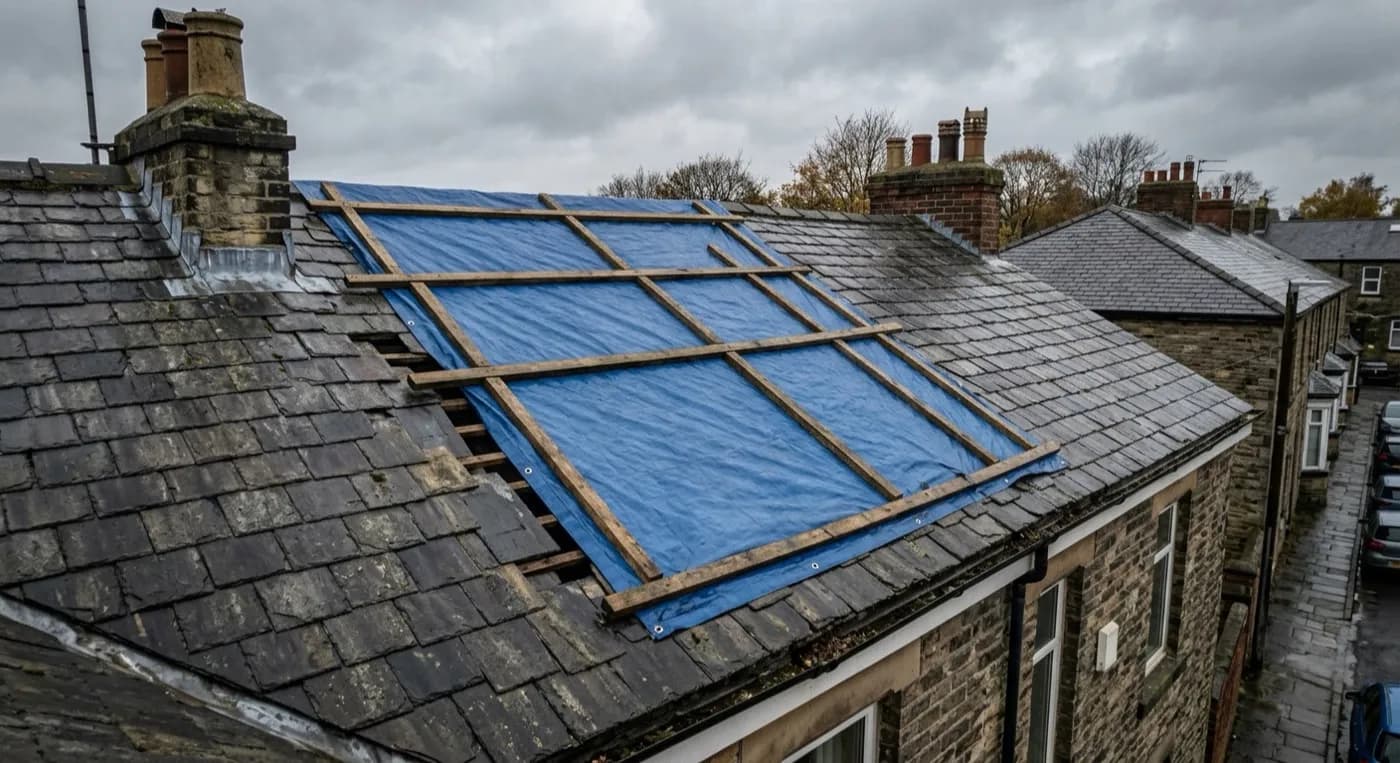
If water is actively getting in or something is at genuine risk of coming loose, a temporary make-safe (a tarpaulin, boarding a window) is reasonable and often expected. A full repair before the damage has been recorded is the step to hold off on.
- Step 5
Book the evidence flight
Ideally before any permanent repair starts, so the roof is recorded in the state the storm left it rather than the state it is in after work has already begun.
Safety
Safety, and what not to touch
Do not go up yourself
A roof that has just been damaged by a storm is not a safe place to be checking with a ladder, particularly in the same or following few days when further wind is common. Leave the close inspection to a flown survey or a professional with the right access equipment.
Do not clear debris from the roof itself
Loose tiles, slipped ridge sections and torn felt are evidence as well as hazards. Ground-level debris in a garden or on a path is generally safe to move once photographed, but nothing needs pulling off the roof before it has been recorded.
Do not ignore a smell of gas or an exposed electrical cable
If a storm has brought down a cable, damaged a flue, or you can smell gas, that is a call to the emergency services or your network operator first, ahead of any roof or insurance step.
Do not assume a covered roof is a repaired one
A tarpaulin over a hole stops water getting in, it does not mean the damage has gone away or that it no longer needs recording. The evidence pack still covers what is visible around and through a temporary cover.
Paperwork
Keeping receipts and a record
Any emergency call-out
A tarpaulin firm, a scaffold company for a make-safe, or anyone brought in urgently. Keep the invoice and a note of what was done and when.
Alternative accommodation
If a room or the whole property becomes unusable, keep receipts for anywhere you stayed as a result, along with dates.
Damaged contents
Photograph anything inside the property affected by water ingress before it is thrown away or cleaned up, and keep any receipts you have for replacing it.
Communication with your insurer
Note the date of your first report, any claim reference given, and the name of anyone you spoke to. It makes every later call faster.
The evidence pack itself
Keep the pack and the full resolution images somewhere separate from the phone they were sent to, in case a device is lost or a claim runs on for months.
Where a flown evidence pack fits into this
It sits between the first-day safety steps above and any permanent repair. Book it once the site is safe and before repair work starts, and it becomes the dated record everything else in the claim can refer back to.
Before you book
Common questions
- How quickly can you get out after a storm?
- As soon as the wind and rain have cleared enough to fly safely, which is often the day after the storm passes. Tell us when you enquire whether there is already a claim deadline or a loss adjuster visit booked, and the flight gets prioritised against it.
- Do I need to be present for the flight?
- No. All that is needed is somewhere lawful to take off and land and permission to be on the property. Plenty of packs are flown for landlords and agents who are not on site.
- What if it is still too windy to fly?
- The flight moves. Flying in the tail end of the same conditions that caused the damage produces unstable imagery that is not worth having, and rescheduling for weather is treated as normal, not as a delay you caused.
- Can this be used for a loss adjuster or insurer submission?
- Yes, that is what it is built for: dated, referenced photographs of the damage at a resolution that holds up under scrutiny. It is not a decision on the claim, which stays with the insurer, and it is not a repair quote.
- What if my roof already has a temporary tarpaulin on it?
- The flight still goes ahead. The pack records what has been temporarily covered and photographs what remains visible, which is usually most of the damage.
- Do you fly close to buildings and in tight streets?
- The A2 Certificate of Competency covers operating closer to buildings and people than the basic category allows, which is what makes terraced streets and town centres workable. Some addresses sit inside restricted airspace and get checked before the booking is confirmed.
- Will you tell me what caused the damage?
- The pack describes what is visible and where it sits, in plain terms. It is not a structural engineer's report and does not attribute a cause beyond what is reasonable to say from the photographs, and it says so rather than overstating what a photograph can prove.
- How much does an evidence pack cost?
- It is a fixed price per property, agreed before the visit, based on the address and the size of the roof. Send the address and what happened and you get a figure back rather than a range.
Call now
Book a claim inspection with Storm Damage Roof Inspection
Tell us the address and what you need looking at. Sam Hembury will come back with a fixed price and the next available slot.